

0
Your selection
Total$0.00
Checkout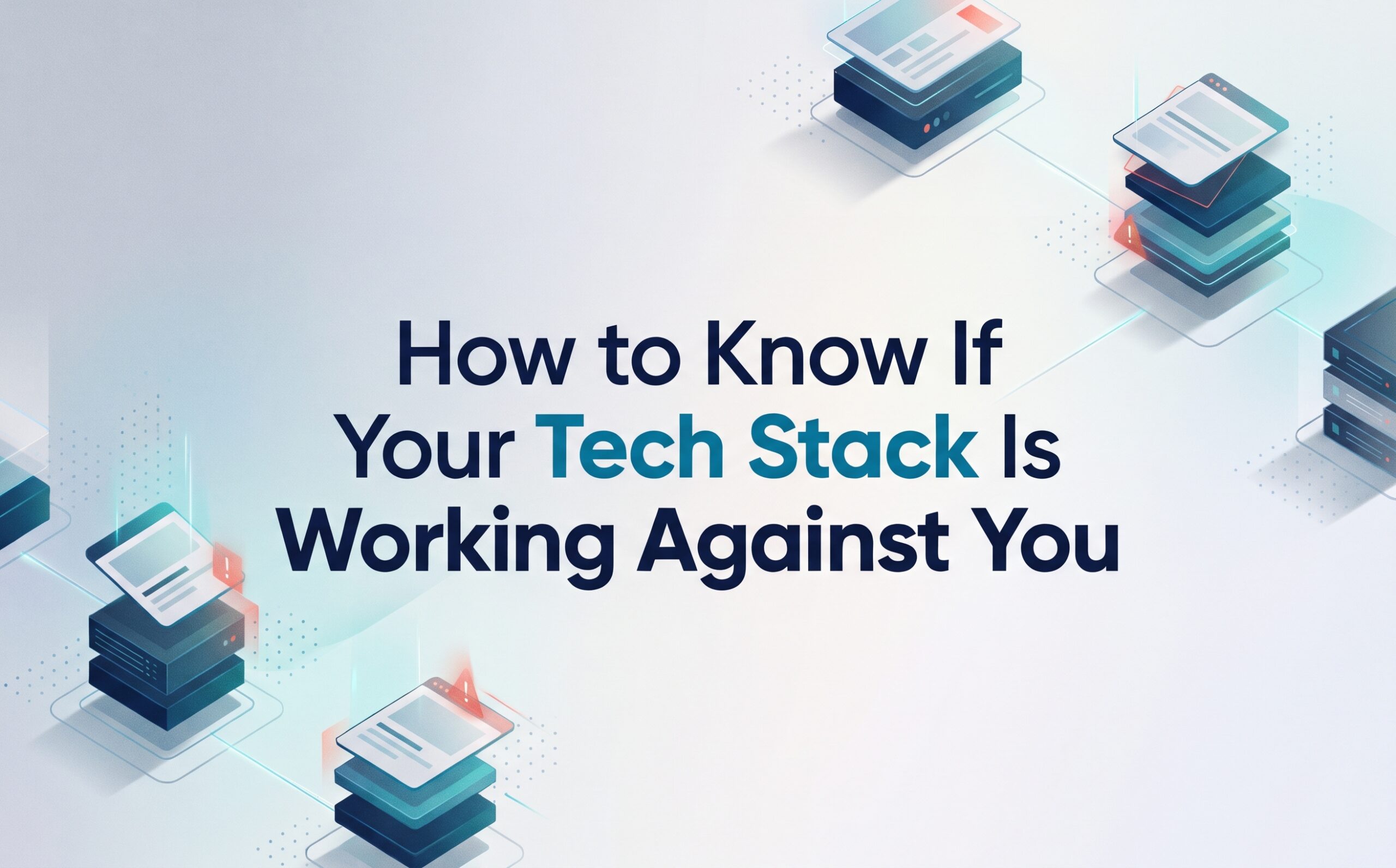
You picked every app in your tech stack for a reason. The CRM because of its dashboard. The email platform because of deliverability. The landing page builder because it was easy to use. The scheduler because it synced with your calendar.
Each one made sense on its own. Together, they might be the reason your business is slower than it should be.
A tech stack becomes a problem when the time spent connecting and maintaining the apps exceeds the time saved by using them. And it happens so gradually that most business owners never notice the crossover.
It starts with a Zapier connection between two apps. Then a workaround because the sync doesn’t handle a specific field. Then a spreadsheet to track what the integration misses. Then a weekly check to make sure nothing broke over the weekend.
None of those tasks appear on your to-do list. They’re background maintenance. They’re the invisible labor of keeping your stack functional – and they add up to hours every week that you’re spending on the system instead of the business.
Here’s a quick diagnostic. Answer honestly:
Do you log into more than three platforms before noon? Do you have at least one integration that breaks every month? Have you built a spreadsheet to track something that should be automatic? Does onboarding a new team member require walkthroughs of more than two apps? When a lead contacts you, do you check multiple systems to see their full history?
If you answered yes to more than two of those, your tech stack is working against you. Not because the individual apps are bad – most of them are fine at what they do. The problem is what they don’t do: talk to each other without you in the middle.
The hidden cost isn’t just your time. It’s decision quality. When you’re toggling between five dashboards, you’re not getting a picture of your business. You’re getting five pictures that you mentally stitch together. And the gaps between those pictures are where the mistakes happen – the lead that fell through, the follow-up that doubled, the metric that looked fine in one app and wrong in another.
The question isn’t whether your apps work. It’s whether they work together. And if the answer is “only because I make them,” the stack isn’t serving you. You’re serving the stack.
$
247
.99
Required per business. Covers the onboarding work to get your messaging system properly set up — intake, brand registration submission with the carriers, phone number provisioning, and infrastructure configuration. With new industry compliance requirements taking effect, this setup ensures your system is built to the latest standards from day one.
What’s included:
For individuals and small businesses getting started with compliant messaging.
$
79
.99
per month
Optional: +1 additional campaign for $24.99 / month (max 2 total)
For growing businesses running consistent outreach across multiple messaging use-cases like promotions, reminders, and follow-ups.
$
149
.99
per month
Optional: Up to +2 additional campaigns for $24.99 / month each (max 4 total)
For established businesses with large contact lists and higher message volume that need infrastructure built for scale.
$
299
.99
per month
Optional: Up to +3 additional campaigns for $24.99 / month each (max 6 total)
For individuals and small businesses getting started with compliant messaging.
$
799
.90
per year
Includes 2 months free
Optional: +1 additional campaign for $24.99 / month (max 2 total)
For growing businesses running consistent outreach across multiple messaging use-cases like promotions, reminders, and follow-ups.
$
1,499
.90
per year
Includes 2 months free
Optional: Up to +2 additional campaigns for $24.99 / month each (max 4 total)
For established businesses with large contact lists and higher message volume that need infrastructure built for scale.
$
2,999
.90
per year
Includes 2 months free
Optional: Up to +3 additional campaigns for $24.99 / month each (max 6 total)
Timeline to send:
Your phone number is provisioned quickly. Carrier review for A2P 10DLC takes approximately 1–4 weeks for full approval. However, some registrations may require additional vetting, documentation, or carrier review depending on the nature of the business, messaging use case, industry category, campaign type, or overall compliance requirements — this window is set by US telecom carriers and applies to every messaging platform, not just Apex Suite. Toll-Free verification (when applicable) takes on average 3–7 days. We’ll keep you updated through every step inside your dashboard.
Want more volume? Add a boost anytime. (Purchase in APP)
Your order includes the $247.99 one-time Messaging Infrastructure setup fee. This covers brand registration, phone number provisioning, and full infrastructure configuration.
A few things to know before you confirm